About the Town
Nestled in the southwestern corner of Rensselaer County, New York, Sand Lake is a proud community in New York's Capital District Region, a 15 minute drive from downtown Albany. The Town of Sand Lake enjoys a comfortable, community feel among the residents of the three hamlets of Averill Park, Sand Lake and West Sand Lake. Route 43 is the current and historical backbone of the municipality.
The Town of Sand Lake was formed in 1812. A part of Rensselaer County in eastern NY, the town is close to Troy and Albany, yet not far from the Berkshires in Massachusetts. The western part of town is undulating while the eastern part is mountainous. Earliest settlers were the Dutch then the Germans arrived in the 1750s. The town is blessed with many lakes and has a rural character. Early industry centered there and along Wynant's "Kill" or creek. Later the town drew many summer residents and tourists. Today the town is best known for its many wonderful and diverse restaurants.
The Hamlets
West Sand Lake
Though all the hamlets within a few miles of each other, West Sand Lake is the largest and most densely developed. It is at the crossroads of two state highways. The west edge of the hamlet is the oldest, with homes dating back to the early 1800s. Currently, it houses the town's main retail area, including a grocery, pharmacy, banks, post office and several other shops and service businesses. The hamlet also contains the elementary school, a fire house with a small museum and two churches. Within and adjacent to the hamlet are long-established residential neighborhoods.
Averill Park
Averill Park is the next largest hamlet, located to the east of West Sand Lake. This area is characterized by small shops, a restaurant, and a pharmacy within an historic structure of the mid 1800s on our main street, There are also two churches in the hamlet. The Averill Park High School is also located here and newer neighborhoods have grown off in many directions.
Sand Lake
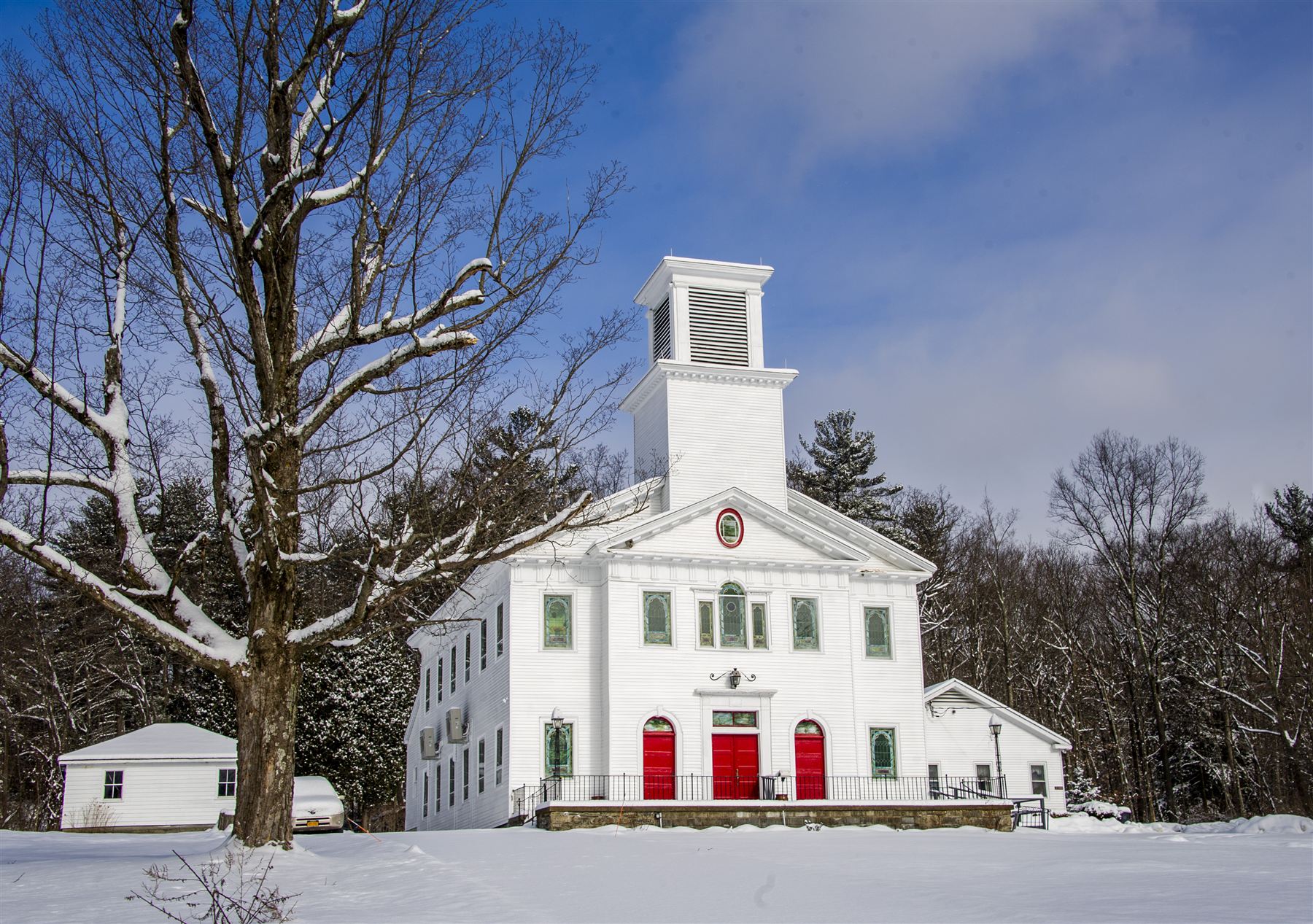
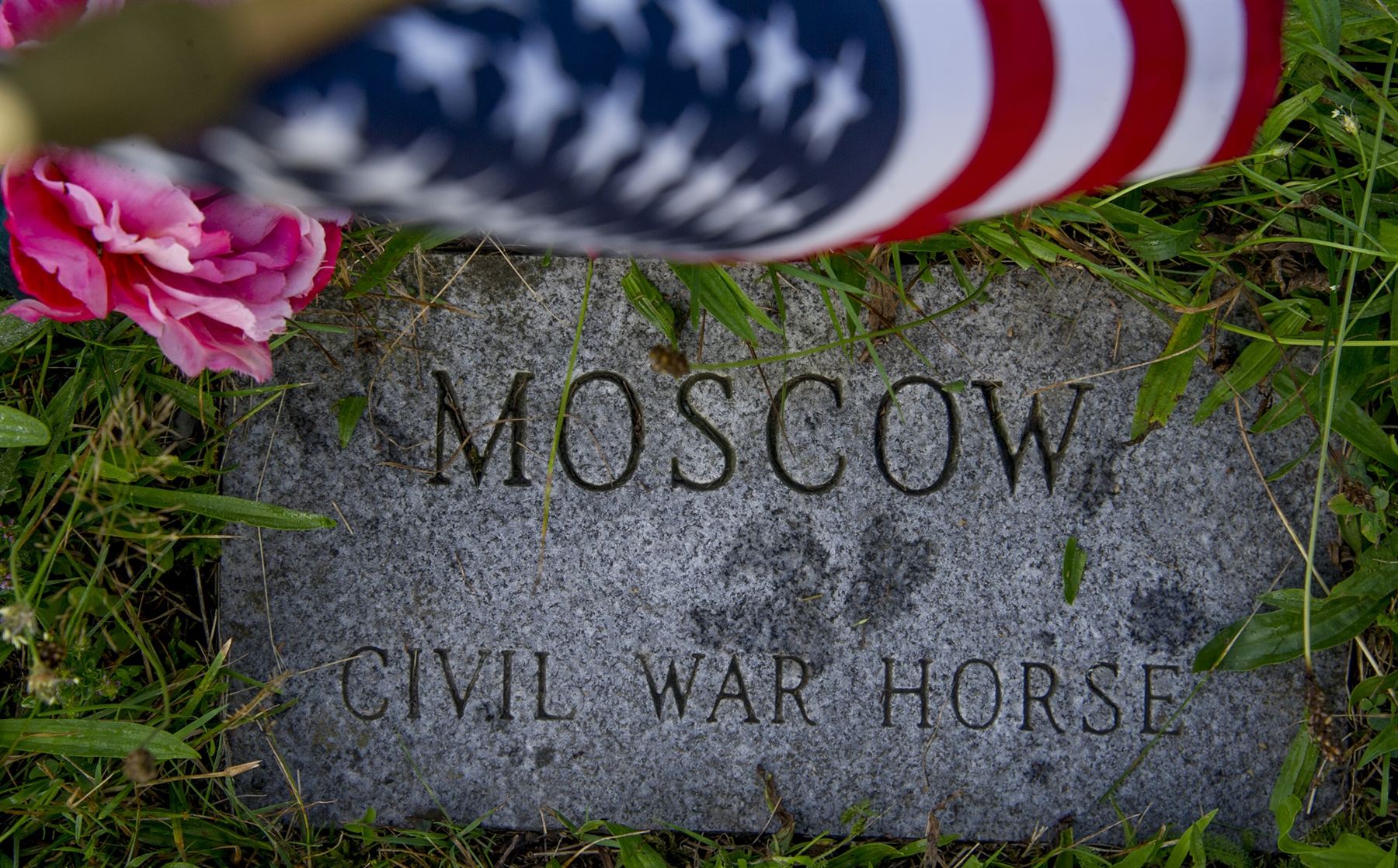
The hamlet of Sand Lake is the smallest in the town. This hamlet, also at a crossroads, contains the Sand Lake Center for the Arts, yet another post office, Town Hall, and an elementary school. In addition there is a convenience store, a hardware store, a tavern and a new mercantile shop. Residential lots surrounding the hamlet are more rural and widely spaced than in the other two hamlets and the east end is the most historically intact with mainly stately homes. A former blacksmith shop now houses a tavern. Sand Lake Union Cemetery is located here, and a beloved civil war horse, Moscow, is buried near his owner.
History of Sand Lake
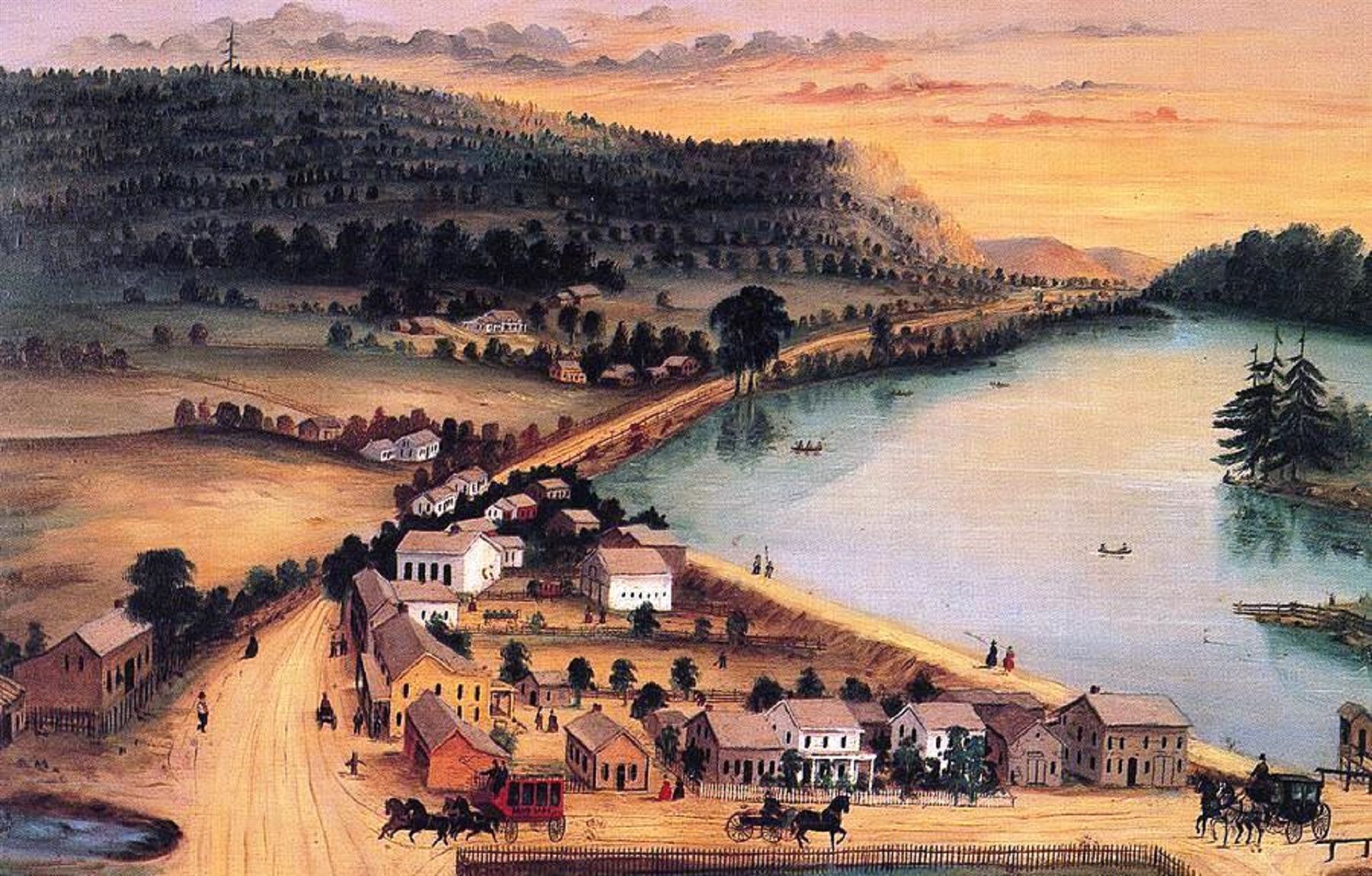
The Town of Sand Lake has a rich history behind its humble beginnings of development and growth.
The full history of the town begins with the Dutch settlements of upstate New York but the true birthday of the Town of Sand Lake is March 1, 1813. On that date, by an act of the legislature on March 21, 1812, the towns of Greenbush and Berlin were divided to form three towns; Greenbush, the new town of Sand Lake and Berlin.
History of the Town of Sand Lake
The text below is reproduced as published on the Town's history page, including its original spelling (for example "countries" for counties and "boarders" for borders).
DEVELOPMENT OF THE TOWN OF SAND LAKE
The boundaries of the Town of Sand Lake, as we know them today, are the result of many divisions and subdivisions down through the years. When Henry Hudson sailed up the river that would bear his name, the land was a wilderness, occupied by a few Indians.
The Manor of Rensselaerwyck was established in 1629, when Kiliaen Van Rensselaer, a wealthy director of the Dutch West India Company, received a land grant from the West India Co, to establish a colony. This grant, which was for the establishment of a colony in the new world, included land on both sides of the Hudson River, between Berrent Island on the south and Cohoes on the north. The territory was 24 miles long and 48 miles wide broad, containing about 700,000 acres and constituted a patroonship.
The colony was under Dutch control until 1664, when the English took possession, only to lose control in 1672. In 1674, the English again regained control and was the ruling government until the Revolutionary War. Under the English, the area was known as the Province of New York and was a colony of England.
Albany County
The first assembly of the Province of New York was held on October 17, 1683. To make the government more manageable, the province was divided into 12 countries. The County of Albany was on of the twelve, and was a very large area, including the Town of Albany, the manor of Rensselaerwyck and Schenectady. It extended from six miles below the City of Hudson north to Saratoga.
The Colony of New York was further divided in 1691 when a law was passed to separate the province and dependencies into shires and counties. According to this act, the County of Albany was to contain the Manor of Rensselaerwyck, Schenectady, as well as other villages and plantations.
In 1705, an Act by the General Assembly of the Province of New York was passed to give the Manor of Rensselaerwyck representation in the General Assembly. This Act provided the necessary officers to manage local affairs, permitting the freeholders of the Manor to elect yearly, a supervisor, treasurer, assessor and a collector.
On March of 1772, Albany County was divided into three counties: Albany, Tryon and Charlotte. Twelve days later, part of Albany County on the east side of the Hudson River was divided into three districts: Schaghticoke, Hoosick and East Rensselaerwyck. The East Rensselaerwyck District extended from the Massachusetts border on the east to the Hudson River on the west and from Columbia County on the south to the Schaghticoke and Hoosick Districts on the north. It encompassed that area that is today the Town of Sand Lake.
The Declaration of Independence of 1776 saw the end of British rule. The Constitution of the State of New York was adopted in Kingston in 1777. This Constitution recognized the cities of New York and Albany and the 14 countries of the State. It also provided that the State Legislature would have the power to divide the same in to such other and further counties and districts as it may appear necessary.
In 1779 the State of New York divided the Manor of Rensselaerwyck into two districts, the West District, all that part of the Manor west of the Hudson River and the East District, the portion east of the Hudson.
Rensselaerwyck
Each of these districts was to appoint one freeholder as a supervisor, between three and nine freeholders' assessors, two freeholders to be collectors, two overseers of the poor, four fence viewers and one clerk. The first annual meeting of the East District of the Manor of Rensselaerwyck was to be held on the first Tuesday of May 1779, at Crailo, at the house of Rebecca Dox.
By an Act of the State Legislature on the 29th of March 1784, the East District of Rensselaerwyck was further divided into two districts, Rensselaerwyck and Stephentown. The dividing line between the two districts, started at a point on the division line of Kinderhook and Rensselaerwyck, ten miles east of the Hudson River, then northerly to a point on the division line between Rensselaerwyck and Schaghticoke, nine miles east of the Hudson River. What was to become the Town of Sand Lake that was partly Rensselaerwyck and partly Stephentown? These two districts were still a part of Albany County. The supervisors of the two districts were authorized to have the division line surveyed and marked, the cost of which would be shared equally by the two districts.
In 1788, the State Legislature reorganized New York State. Three Acts were debated and passed on the same day, March 7. The first, divvied the state into sixteen counties, one of which was Albany County. Albany County was reduced in size but still extended on both sides of the Hudson River. The second divided the counties into towns: thus the Districts of Rensselaerwyck and Stephentown became the Towns of Rensselaerwyck and Stephentown, with the same border. The third act, provided for the defraying the public and necessary expenses of each county.
There followed a number of changes of county boarders and the establishment of new towns in a relative short time. On February 7, 1791, Rensselaer County was established. The Towns of Easton and Cambridge in Albany County were annexed to Washington Co., The remaining part of Albany County east of the Hudson River was divided from Albany County and named Rensselaer County. In the same year the Towns of Troy and Petersburg were established, annexing the northern portion of the Towns of Rensselaerwyck and Stephentown. Then on April 10, 1792, the Town of Greenbush was established by dividing the Town of Rensselaerwyck in two parts. About 2/3 of what was later to become Sand Lake was in Greenbush, the remainder in Stephentown.
The three towns of Stephentown, Schodack and Petersburg were divided to form five towns on March 21, 1806, establishing the new towns of Berlin and Philipstown. Philipstown was later name Nassau. The remaining portion of the Town of Rensselaerwyck was renamed Schodack, thus ended the name Rensselaerwyck.
The Town of Sand Lake
By an act of the legislature on March 21, 1812, the towns of Greenbush and Berlin were divided to form three towns; Greenbush, the new town of Sand Lake and Berlin. This division took effect on March 1, 1813, so the true birthday of the Town of Sand Lake is March 1, 1813. The first town meeting was held at the dwelling house of Thomas Thompson, the brother of Calvin Thompson, who became the first Supervisor.
The first officers of the Town of Sand Lake were:
- Supervisor: Calvin Thompson
- Town Clerk: David E. Gregory
- Assessors: Lawrence Van Alstyne, John Clint and Ezra Newton
- Commissioners of Highways: John Stevens, John North and Jacob Boyce
- Overseers of the Poor: Stephen Gregory, Lewis Bullock
- Collector: Jonathan Ford; Henry Lord
- School Commissioner: Aretus Lyman; Joel Bristol; Ellis Forster
What happened along the border of Greenbush and Sand Lake is not certain, but in 1843, a very short Act of Legislature simply stated "All that part of the Town of Sand Lake in the County of Rensselaer, on which the dwelling house of Andrew L. Weatherwax now stands, shall be annexed to, and form a part of, the Town of Greenbush."
On March 2, 1848, the Town of Sand Lake was divided into two towns, Sand Lake and Poestenkill. This final division created the Town of Sand Lakes boundaries as we know them today. On Monday proceeding the first Tuesday in April 1848 the first meeting of the newly formed Town was held at the house of Calvin Sliter.
GOVERNMENT
The counties were governed by a Board of Supervisors. Each town would elect a Supervisor to represent its citizens on the County Board of Supervisors. This board had the power to collect taxes and distribute monies to the towns.
Initially, the towns had little power. In the year 1901, town government in the State assumed more definitive form. The State Legislature established a system of judiciary. Provision was made for the assessment and collection of taxes. The settlement and relief of the poor; the regulation of highways; establishing the power of town meetings; and defining the duties of town officers. Town meetings were held in private homes and Inns, with an annual meeting once a year. It was not until 1972 when the former Presbyterian Church was obtained and transformed into the Town Hall, that a regular meeting hall became available.
County government was the primary form of local control. Each town elected a supervisor to represent the town at the meetings of the County Board Supervisors. The Board of Supervisors was the legislative body for the making of law and ordinances for the county, and the raising of monies to cover the cost of operation. These monies were distributed to each town in accordance to needs.
In 1964, the State Legislature enacted the Municipal Home Rule Law, greatly extending the powers of each town. As a result, Rensselaer County in 1968 revised its form of government. The Board of Supervisors was dissolved. In its place, a County Executive and a County Legislature was formed.
Until this time, the Town of Sand Lake was governed by a Supervisor, four Justice of the Peace with voting rights and a Town Clerk. With the change, the town legislature was made up of a Supervisor, and four councilmen as voting members. A town clerk and two justices were also elective position. The office of justice of the peace was changed to town justice.
More local history
- Office of the Town Historian - Bob Moore, Wednesday and Thursday 11 am - 3 pm
- Sand Lake Historical Society
- Historical Collections Website (on the current Town site)
- Video: "Amazing Graves: The Ghosts of Sand Lake" (on the current Town site)
- Town of Sand Lake Then & Now (on the current Town site)
Source: townofsandlake.us/townofsandlake, townofsandlake.us/historyofsandlake and History of the Town of Sand Lake, copied November 11, 2026. A population figure on the About page is left out here because Town sources disagree; it will be added once the Town confirms it. Photo and painting credits are not stated on the source pages.